About us

History

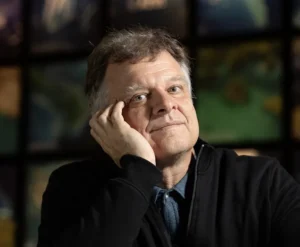
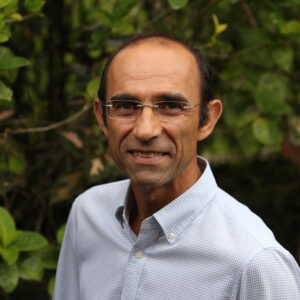
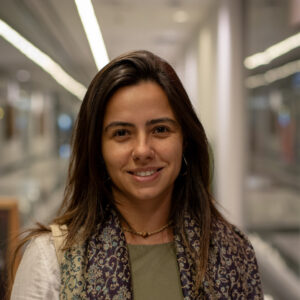
The Frontiers of Development Institute began its activities in 2020. Its origin is based on the trajectory of its founding members: Paulo D. BrancoMario Monzoni e Beatriz Pacheco; all with extensive experience and pioneering spirit in the sustainability agenda in Brazil, as well as in leading important private and civil society organizations.

At the origin of many initiatives and organizations that today define this agenda are the contributions of Beatriz, Mario, and Paulo. For over thirty years, they have been dialoguing, learning, and co-creating solutions that promote truly sustainable development.

During this period, they have also contributed, through their work as teachers and facilitators of educational processes, to the training of thousands of professionals who now hold leadership positions in governments, companies, non-governmental organizations, and society in general.

All of this trajectory inspired the creation of Fronteiras, whose name stems from a commitment to working on issues that are at the forefront of sustainability and that truly address the challenges of reducing inequalities, as well as confronting the climate emergency and biodiversity loss.

Who we are

We are diverse in origin, background, professional trajectory, and orientations. Our encounters, what unites us, occur at the borders, along the dotted lines, in the in-between space of possibilities. It is there that our profound commitment to development that transforms with justice, equity, and regeneration is expressed.

We are equally concerned with the positive impact of our actions and how that impact is achieved. For this reason, we seek to build quality relationships with each other and with everyone we interact with, both human and non-human.

We are a team of professionals who adapt to the needs of each project, with experience in various areas such as: human and organizational development, business and project management, entrepreneurship, innovation, design, information technology, economics, finance, engineering and environmental management, sustainability, agronomy, territorial development, and public policy.
Deliberative Council

Martha Abreu
President of the Council

Full Professor at the Institute of History of the Federal Fluminense University, recognized for her research on Afro-Brazilian culture, the memory of slavery, public history, popular culture, race relations, gender, and post-abolition experiences in Brazil. She is also one of the coordinators of the project "Present Pasts: memory of slavery in Brazil" and conducts research focused on quilombola communities in the state of Rio de Janeiro.

Fabio Scarano
Vice President of the Council

Professor of Ecology at UFRJ (Federal University of Rio de Janeiro), Curator of the Museum of Tomorrow, and holder of the UNESCO Chair in Literacy for the Future. A Forestry Engineer with a Ph.D. in Ecology, Fabio has served on UN panels for climate (IPCC) and biodiversity (IPBES) and was a director at the Rio de Janeiro Botanical Garden, Conservation International, and the Brazilian Foundation for Sustainable Development. He has received two Jabuti Literature Prizes in the field of Natural Sciences.

José Luiz Majolo
Council Member

An entrepreneur, he developed his career in the financial market, where he was president of Banco Sudameris, Vice-President for Latin America of ABN Amro Real, chairman of the Board of Directors of the Credit Guarantee Fund (FGC) and of the Board of Directors of Banco Votorantim. He is currently an entrepreneur in biosustainable businesses, in the area of green chemistry.

Leeward Wang
Council Member

Businessman and founding partner of Kiro, he holds a postgraduate degree in Sustainability Management and a degree in Public Administration, both from FGV EAESP. He was Director of the Zona Leste Sustentável Fund, an initiative of the Tide Setúbal Foundation, and a researcher at the Center for Sustainability Studies at FGV EAESP.

Lorraine Smith
Council Member

Independent consultant focused on initiatives with real positive impact and innovations that promote an economic system that serves life. She was a director at Volans, SustainAbility, and Canadian Business for Social Responsibility, where she led consulting projects for global companies in the forestry, agriculture, food, apparel, mining, financial services, consumer goods, and manufacturing sectors. She is originally from Toronto, Canada, and currently resides in northern Ontario.

Executive Board

Paulo D. Branco
Executive Director

Founding member of IFD and founding partner of Ekobé, [Name], one of the first Brazilian consulting firms specializing in corporate sustainability. Professor of postgraduate courses and member of boards and committees of companies and civil society organizations. He was Deputy Director of the International Institute for Sustainability (IIS) and Vice-Director of the Center for Sustainability Studies at FGV EAESP (FGVces). Master's degree in Business Administration from PUC Rio. More than 25 years of experience in integrating principles and practices of sustainable development into the value chain of different sectors, both nationally and internationally.

Team

Ana Carolina Barezi
Associate and Leader of Sociobiodiversity

An Environmental Engineer specializing in Strategic Sustainability Management and holding a Master's degree in Biodiversity Conservation and Sustainable Development, she has worked for 13 years in programs and projects focused on sustainability. Her career includes multinational companies, consultancies, and third-sector organizations, with an emphasis on innovation and production chains. She has experience in the Atlantic Forest, Cerrado, and Amazon biomes.

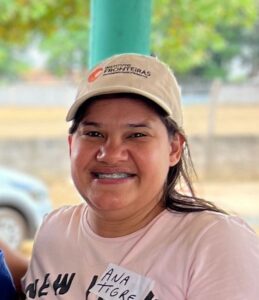
Ana Ribeiro Tigre
Socio-environmental Analyst

Ana is an agronomist graduated from the Federal University of Southern and Southeastern Pará (UNIFESSPA) and holds a postgraduate degree in Project Management in Environmental Education. She has worked as a tutor in technical courses at the National Rural Learning Service of Pará (SENAR PA) and in the Agronomy course at Uniasselvi College in Marabá (PA). She also worked as an extension agent in the Productive Forests project, developed by ANATER and coordinated by EMBRAPA in the state of Pará. Ana is dedicated to promoting initiatives that connect social impact, sustainability, and economic development in Amazonian territories. Engaged in training processes and collaborative construction, she believes in the power of people and networks to transform realities.

Beatriz Duarte
Associate and Program Director

Graduated in Design from the Federal University of Pernambuco, with postgraduate studies in Administration and Entrepreneurship from the University of Otago, New Zealand, and a Master's degree in Sustainability Management from FGV EAESP. She has over 15 years of experience in socio-environmental and circular economy projects. As a consultant, she coordinated innovation projects for national and multinational companies in different sectors. She co-founded Lumiar and Utopiar, creating circular and inclusive business models that expand opportunities for individuals in situations of social vulnerability. She also held leadership positions at the Akatu Institute and Boomera, creating strategies and processes that enable the management of socio-environmental metrics.

Eliane Monteiro
Head of Administration, Finance and IT

Master's degree in Applied Computing and Automation from UFF, Electrical/Electronic Engineer from Santa Úrsula University, and Systems Analyst from IBPI, she holds a specialization in Renewable Energies, Distributed Generation, and Energy Efficiency from the Polytechnic School of USP. Extensive experience in developing systems of varying sizes and purposes, especially those supporting decision-making, indicator management, quality control, and improvement of administrative and financial processes. Founding partner of Ekobé Tecnologia, where she led the development and implementation of solar power generation systems.

Vinicius Martins
Local Coordinator

Master's student in Planning and Regional and Urban Development in the Amazon at the PPGPAM of the Federal University of Southern and Southeastern Pará (UNIFESSPA) and graduated in Economics from the same institution. He worked as a researcher at the Laboratory of Regional Accounts of the Amazon (LACAM) and at the Center for Studies and Research in Food (NEPA) at UNICAMP, where he participated in a project on the impact of the National School Feeding Program (PNAE) on productive inclusion and food security. He volunteered at the Latin American Institute of Agroecology (IALA) Amazon. His experiences and interests focus on social accounting, regional development, bioeconomy, family farming, agroecology, and food security.

Transparency

We value transparency in our actions and relationships. Based on this principle, we share here our bylaws and documents relating to our activities.