Living on the borders to reinvent development.
We live in a time when the planet's boundaries—ecological, social, and ethical—are under pressure.
But that's exactly it on the borders that's where transformations are born.
Between the human and the non-human.
Between the local and the global.
Between traditional knowledge and scientific knowledge.
O Frontiers of Development Institute acts in these in-between places —
where dialogue is more challenging, but also more fruitful.
Where the encounter between differences creates something new.
Where cooperation transforms into collective strength.
We defend a safe development,
that respects planetary boundaries and regenerates ecosystems,
and a fair development,
that ensures dignity, diversity and well-being for all people.
We work to build regenerative value chains,
where natural resources, knowledge, and labor are an expression of the balance between the economy, people, and nature.
We do this through education, multi-sectoral collaboration e access to markets,
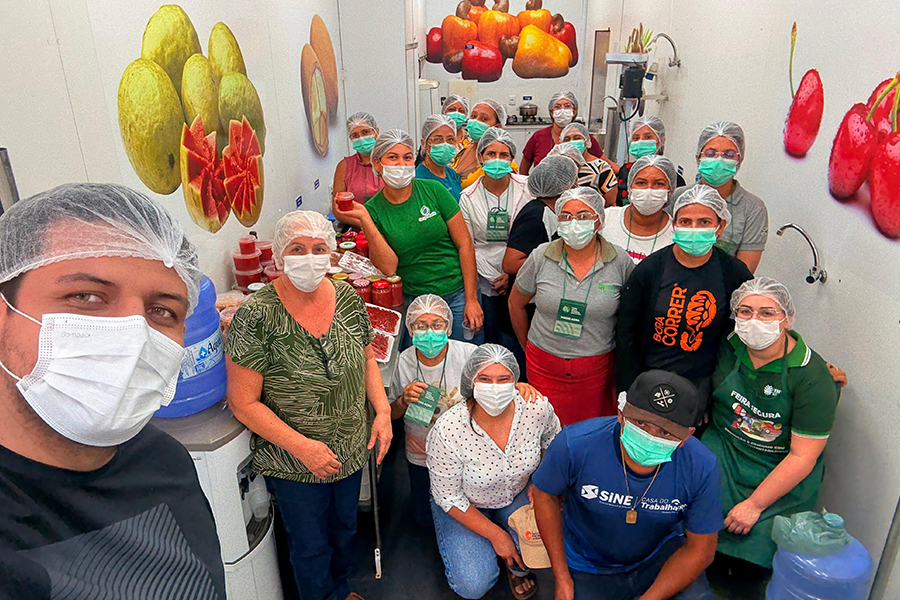
Strengthening those already in the territory: family farmers, traditional peoples and communities, women and young people who shape the present and future of rural Brazil and the connections between the countryside and the city.
We believe that borders are not barriers.,
but crossing spaces,
where development ceases to be a finish line and becomes a A continuous movement of care, reciprocity, and co-creation..
Living on the borders is our way of being and existing in the world.
It is there, where the lines meet and diverge,
The future is beginning to take shape.
We contribute territories from two main areas: the agri-food systems and the sociobiodiversity.
They are the foundation of the local economies, cultures, and regenerative solutions that we support.
Agri-food systems are the backbone of life in these territories. It is within them that biodiversity, culture, labor, and production converge to generate food, income, identity, and well-being.
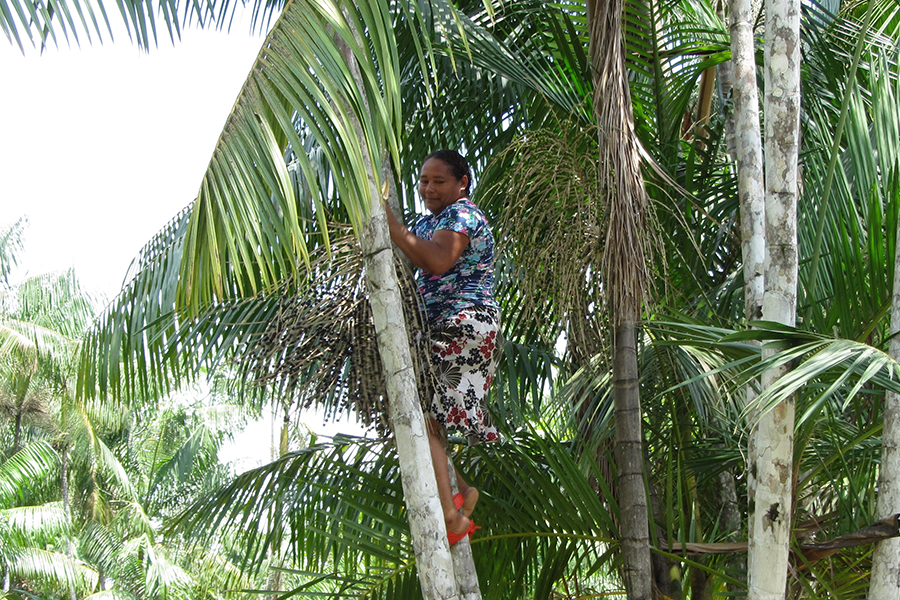
Sociobiodiversity is the living expression of the relationship between people, territories, and nature. It arises from lifestyles, management practices, collective memories, and knowledge formed through continuous interaction with forests, rivers, seas, soils, and native species.
We understand that transforming agri-food systems doesn't just mean improving farming techniques—it's about reconfiguring the relationships between producers, buyers, consumers, and how the territory is organized.
At the Frontiers of Development Institute, we adopt an integrated approach to agri-food systems, as they involve soil, forests, water, people, institutions, markets, public policies, and cooperation networks. We work to make these systems more sustainable, inclusive, and regenerative, combining traditional knowledge, local capacities, contextualized innovation, and territorial governance.
We work to strengthen agroecological practices, short supply chains, circularity in value chains, productive organizations, and policies that make sense for the reality of the territories—especially in the Brazilian interior, where the socio-environmental dynamics demand specific models that are sensitive to people, ways of life, and biomes.
We believe that transforming agri-food systems means creating conditions for autonomy, food security, and prosperity. It means recognizing the leading role of family farmers, traditional peoples and communities, women, and young people who keep the food cycle turning daily, often under adverse conditions. It means building pathways so that producing food also generates a dignified life, fair income, and the conservation of ecosystems.
Key areas in Agri-food Systems
Agroecological transition and regenerative management of the soil, water and ecosystems.
Strengthening technical and organizational capabilities, with leadership training, productive management and cooperativism.
Short and tight chains, bringing producers, local markets, public procurement and consumers closer together, and promoting circularity.
Territorial infrastructure and logistics, guaranteeing the flow of goods and real access to markets.
Multistakeholder governance, connecting public policies, local institutions, the private sector, and community groups within the territory.
Promoting local production, promoting food identity and food culture in the territories.
Integrated solutions for territorial development, connecting production, nature, climate and land use.
At the Frontiers of Development Institute, we recognize this dimension as one of the pillars of territorial development that is regenerative, plural, and deeply rooted in the reality of each community.
Acting with this focus means understanding that conservation is not about treating nature as something static, but about strengthening life forms that keep ecosystems, cultures, and local economies in motion. Each territory carries a unique combination of biodiversity, knowledge, identities, community relations, and productive practices. It is this tapestry that sustains what we call... living territories.
Sociobiodiversity manifests itself in native foods, knowledge about the use of plants, traditional management techniques, sustainable extraction, agroforestry, handicrafts, community-based tourism, solidarity economy networks, and women's and youth collectives. These socio-productive arrangements not only generate income: They maintain species, reproduce cultures, strengthen bonds, and enhance the resilience of communities..
At Fronteiras, we work to transform these practices into territorial, fair and regenerative value chains, capable of expanding economic opportunities without disrupting the socio-ecological relationships that sustain bioregions. This includes everything from strengthening local capacities and community organization to articulating public policies, supporting infrastructure, and connecting initiatives to markets committed to conscious consumption and responsible sourcing.
Our work is guided by an ecology of knowledge—valuing the dialogue between science, innovation, traditional knowledge, community experiences, and social technologies. We also recognize the risks that arise when socio-biodiversity is captured by market logics that disrespect the territory. Therefore, we advocate for a... a situated, community-based bioeconomy oriented towards well-being., where fair distribution of benefits, local autonomy, and multi-sectoral governance are essential conditions.

For us, sociobiodiversity is not just a collection of products: it is a way of existing, Based on reciprocity, belonging, and care, it inspires us to build futures where conservation and dignity go hand in hand.
Key areas in Sociobiodiversity Supply Chains
Strengthening socio-biodiversity supply chains and ventures, supporting production, processing, logistics, community organization and marketing.
Valuing native species and traditional ecological knowledge., integrating local knowledge, science and innovation to generate territorial value.
Community and solidarity economies, strengthening associations, cooperatives, women's collectives and socio-environmental impact businesses.
Territorial governance of socio-biodiversity, articulating public policies, institutional procurement, conservation instruments and territorial rights.
Connecting with conscious markets, expanding responsible consumption and the visibility of products that keep territories alive.
Cultural preservation and transmission of knowledge, strengthening local practices, identities, languages, rituals and techniques.
Promoting regenerative territories, where biodiversity, income, culture, and autonomy reinforce each other.
Fronteiras operates in an integrated manner in six complementary axes, which connect people, organizations, public policies, and markets:
Access to Sustainable Markets – A connection between producers, buyers, and consumers, valuing origin and socio-biodiversity, as well as territorial development.
Public Policies and Advocacy – Coordination between federal, state, and municipal public policies that affect territories, aiming to improve their impacts as well as their formulation.
Financing and Regenerative Investment – Support for access to public and private financial resources aligned with productive inclusion and the socio-bioeconomy.
Innovation and Regenerative Solutions – Connection with research, development and innovation centers, aiming to add value to socio-biodiversity assets, in line with the context of each territory.
Engagement, Networks and Governance – Creation and consolidation of multi-sectoral collaboration spaces in the territories.
Education and Training – Leadership development and strengthening of local capacities, including rural schools.
Value chain
Connecting producers, buyers, and consumers, valuing origin and socio-biodiversity, as well as territorial development.
Coordination between federal, state, and municipal public policies that affect territories, aiming to improve their impacts as well as their formulation.
Support for access to public and private financial resources aligned with productive inclusion and the socio-bioeconomy.
Connecting with research, development, and innovation centers, aiming to add value to socio-biodiversity assets, in line with the context of each territory.
Creation and consolidation of multi-sectoral collaboration spaces in the territories.
Leadership development and strengthening of local capacities, including rural schools.